
The Myth of Solo Healing
The ideal of the self-made individual is deeply woven into our culture. We are taught to be independent and resilient, to pull ourselves up by our own bootstraps. But when it comes to emotional recovery, does this mindset truly serve us? Applying this ethos of fierce independence to our inner world can be counterproductive, leaving us feeling isolated in our struggles.
The truth is, we are neurologically wired for connection. Science shows that co-regulation, the process of stabilizing our nervous system through interaction with others, measurably reduces stress and anxiety. Think of that moment of relief when a friend simply sits with you in silence. That is your biology responding to presence. There is a powerful resonance that occurs when you see your own struggle reflected in someone else's story. In that instant, shame dissolves because you realize you are not alone.
This need for community support for healing is not just a psychological preference. Ancient Kabbalistic wisdom teaches that our souls are interconnected, part of a greater whole. When we heal in community, we are not just mending our own wounds. We are contributing to a universal repair, a collective return to wholeness.
Anatomy of a Truly Supportive Community
Understanding why we need community is the first step. The next is recognizing what a genuinely supportive environment looks like. It is not a place for passive listening or unstructured complaints. A healing community is built with intention, designed to create safety and encourage authentic growth. Its architecture rests on several key pillars.
- Shared Purpose: The group’s effectiveness hinges on a unified goal. Whether it is mastering specific emotional freedom techniques or pursuing broader spiritual development, a common objective aligns everyone’s energy and focus.
- Active Listening: This is the bedrock of safety. It means listening to understand, not just to formulate a response. It is the practice of offering your full, non-judgmental attention, creating a space where someone feels truly heard.
- Structured Vulnerability: Safety does not happen by accident. It is created through clear guidelines and skilled facilitation that allow people to share at a pace that feels right, preventing oversharing that can lead to regret or harm.
- Empathy Over Sympathy: This distinction is critical. Sympathy says, “I feel for you,” which can create distance. Empathy says, “I feel with you,” building a bridge of shared human experience. It is the difference between watching someone in the rain and standing with them under the same umbrella.
This philosophy of intentional community is about creating a space where genuine transformation can occur. It is a principle you can explore further by understanding the mission behind Lev Emunah, which is dedicated to building such containers for growth.
Finding Your Circle of Support in 2026
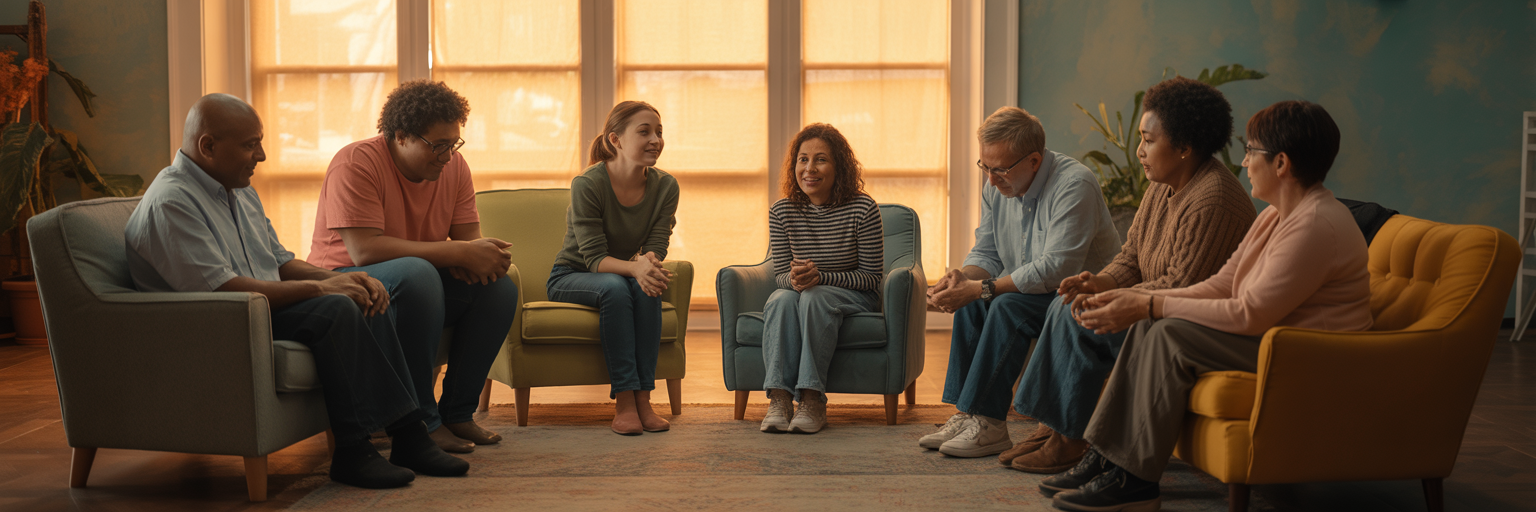
So, where do you find these circles of trust? Knowing how to find a support group that aligns with your needs is a practical skill. In 2026, the pathways to connection are more diverse than ever, blending digital access with real-world interaction. You can start by exploring local and niche groups. For instance, a quick search on platforms like Meetup reveals a thriving interest in specific modalities. As an example, the site hosts thousands of members in groups dedicated to the Emotional Freedom Technique, offering a direct way to find local practitioners and fellow learners.
Online communities have also matured into powerful spaces for connection. Digital-first organizations like the Emotional Freedom Fellowship provide structured support systems that transcend geography, connecting people through shared purpose and moderated forums. These spiritual growth communities offer a sense of belonging without physical proximity.
A third path is to join a structured program with a pre-built community. This is often the most efficient route, as the group is curated and guided by experienced facilitators. For those seeking a focused journey, some organizations offer integrated courses where community is a core component of the curriculum, not an afterthought. To help you decide, consider the different models available.
| Feature | Local Groups (e.g., Meetup) | Online Fellowships | Structured Programs |
|---|---|---|---|
| Accessibility | Limited by geography | Globally accessible | Accessible online or at specific locations |
| Level of Structure | Varies; often informal | Moderately structured with guidelines | Highly structured with a curriculum |
| Type of Connection | In-person, tangible presence | Digital, based on shared text/video | Guided, deep connection within a cohort |
| Vetting & Safety | Relies on member reviews and self-policing | Moderated by administrators | Professionally facilitated and vetted |
This table helps compare different community models based on individual needs for flexibility, guidance, and type of interaction. The best choice depends on personal goals and learning style.
Before committing, ask yourself: Does this group have a clear purpose? Is there a facilitator or a set of shared agreements? Does the level of vulnerability expected feel right for me right now? Answering these questions will guide you to the right circle.
The Art of Engaging for Mutual Growth
Finding a group is one thing; actively participating for mutual growth is another. The true benefits of group dialogue emerge when you learn how to engage with intention. This begins with how you share. There is a difference between processing for healing and simply venting. Processing involves self-reflection and a desire for insight, while venting often reinforces a cycle of complaint. Learning to share with purpose makes your contribution constructive for both you and the group.
Just as important is the often-overlooked skill of receiving support gracefully. How many times have you deflected a compliment or minimized an offer of help? Accepting support without apology or justification is a powerful act of self-worth. It signals to yourself and others that you are deserving of care.
Conflict is also a natural part of any deep human connection. When disagreements arise, they are not a sign of failure but an opportunity for growth. Learning to express your perspective respectfully while truly hearing another’s is a skill that will serve you in all areas of life. Ultimately, the process is symbiotic. When you offer empathy and hold space for others, you reinforce your own healing. The transformation that comes from this shared commitment is profound, as shared by many who have walked this path and discovered the power of mutual support.
Integrating Community Healing into Daily Life

The goal of a support community is not to create dependence on it, but to equip you with tools that last a lifetime. The real work is integrating the healing you find in the group into your everyday existence. You can start by transferring skills like active listening and clear communication to your relationships with family, friends, and colleagues. Notice how conversations change when you listen just to understand.
Over time, you will develop what can be called an 'inner community'. The supportive voices of the group become internalized, offering you strength and perspective even when you are alone. You begin to treat yourself with the same compassion you have learned to offer others. This is the mark of true integration.
As you grow, your role in the community may naturally evolve. You might find yourself becoming a pillar of support for new members, a mentor who guides others. This act of giving back deepens your own journey. And sometimes, growth means recognizing when it is time to move on. Outgrowing a group is not a failure; it is a sign of success. Transitioning with gratitude allows you to honor the role the community played in your journey while making space for your next chapter. Continuing your journey with a solid foundation is key, and resources like Lev Emunah exist to support that ongoing path to personal and spiritual well-being.