
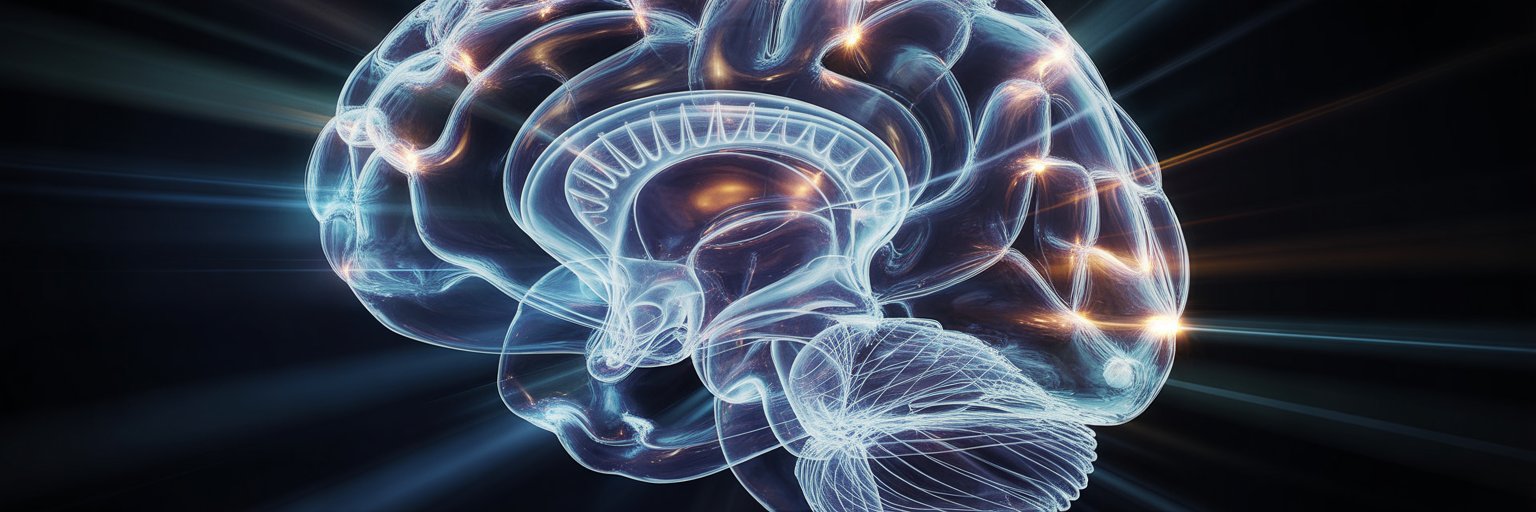
The Inner Workings of a Meditative Mind
For centuries, contemplative traditions have taught that the mind can be trained for greater peace and clarity. Today, neuroscience is revealing the precise blueprint of how this transformation occurs within the brain’s own architecture. This bridge between timeless spiritual goals and evidence-based understanding is central to a holistic approach to personal development, a philosophy we explore further in our mission.
Guided meditation is not simply daydreaming. It is a structured practice designed to train your attention and awareness. The key to understanding how meditation changes your brain lies in a concept called neuroplasticity. Think of your brain's neural pathways like trails in a forest. The more you walk a specific path, the more defined and easier it becomes to follow. Similarly, meditation repeatedly activates certain brain circuits, strengthening them over time.
The neuroscience of guided meditation highlights two key areas. First is the prefrontal cortex, which you can picture as your brain’s calm and collected CEO. It handles focus, decision-making, and rational thought. Then there is the amygdala, the brain’s sensitive alarm system, which processes emotional reactions like fear and stress. In an untrained mind, the alarm system can easily hijack the CEO, leading to impulsive reactions.
Meditation acts as a workout for your brain. It strengthens the prefrontal cortex, enhancing the CEO’s ability to manage the alarm system. With consistent practice, you are not just calming your mind for a few minutes. You are physically remodeling your brain for more resilience and focus.
Achieving Emotional Balance Through Practice

With the brain's CEO and alarm system working in better harmony, what does that feel like in our daily lives? This is where the practice translates into profound emotional freedom. Meditation for emotional regulation is not about suppressing feelings. Instead, it is the capacity to observe your emotions without being overwhelmed by them, creating space for a thoughtful response rather than an impulsive reaction.
Neurologically, this happens because consistent practice reduces reactivity in the amygdala. As reported in a Scientific American article on the benefits of meditation, neuroscientists have observed that long-term practitioners show decreased gray-matter density in the amygdala, which plays a key role in processing stress. This means the emotional alarm bell becomes less trigger-happy.
At the same time, meditation strengthens the insula, a brain region responsible for interoception, which is your awareness of internal bodily sensations. By enhancing this connection, you can detect the early physical signs of an emotional shift, like a knot in your stomach or tightness in your chest. This awareness gives you a crucial window to consciously address the feeling before it takes over. Instead of lashing out in traffic, you notice the rising frustration, take a breath, and maintain your inner calm. The journey toward this kind of emotional freedom is a common theme, as many of the personal stories of transformation we've witnessed attest.
| Factor | Untrained Brain Response | Meditative Brain Response |
|---|---|---|
| Emotional Trigger | Receiving unexpected criticism at work. | Receiving unexpected criticism at work. |
| Amygdala ('Alarm System') | High activation; triggers immediate fight-or-flight stress response. | Lower activation; the initial emotional spike is less intense and shorter. |
| Prefrontal Cortex ('CEO') | Becomes 'hijacked' by the amygdala; rational thought is impaired. | Remains online; actively assesses the situation and modulates the emotional response. |
| Behavioral Outcome | Impulsive defensiveness, rumination, and prolonged stress. | A conscious pause, thoughtful consideration of the feedback, and a calm reply. |
This table illustrates how a brain trained through meditation responds differently to the same emotional stimulus. The data points are based on established neuroscientific models of emotional regulation and the observed effects of contemplative practice on brain function.
Connecting Brain Science with Kabbalistic Wisdom
This scientific map of the mind finds a profound echo in ancient spiritual traditions, particularly in Kabbalah. The Kabbalistic concept of Tikkun HaNefesh, or rectification of the soul, is a framework for personal growth focused on refining one's inner character. Traditional Kabbalah meditation techniques, such as Hitbodedut (a form of secluded, conversational prayer), are designed to quiet the mind and cultivate deep self-awareness. The parallels between modern science and this ancient wisdom are striking.
When we look closer, we see that spiritual growth and neuroscience are two languages describing the same process of human transformation. Scholarly work, such as the neurophenomenological analysis described in a study on consciousness states in the Zohar, explores how these spiritual experiences correlate with specific patterns of brain activity, validating the deep connection between contemplative practice and neural function.
Here is how these two systems align:
- Neuroplasticity and Tikkun HaNefesh: Neuroplasticity can be seen as the physical mechanism through which the spiritual work of Tikkun HaNefesh takes place. As you work to refine your character traits, you are literally strengthening positive neural pathways and weakening negative ones.
- Focused Attention and Hitbodedut: The focused attention trained in guided meditation mirrors the deep, intentional self-reflection of Hitbodedut. Both practices train the mind to move beyond surface-level chatter and connect with a deeper layer of consciousness. These profound concepts, rooted in texts like Likutei Moharan, offer a timeless map for inner work that modern science is just beginning to chart.
- Self-Transcendence and Bitul: Neuroscience links moments of self-transcendence to reduced activity in the Default Mode Network, the brain's "me-centric" hub responsible for mind-wandering and self-referential thought. This directly corresponds to the Kabbalistic goal of Bitul (self-nullification), where quieting the ego allows for a connection to something greater than oneself.
Integrating Meditation into Your Daily Routine

Understanding the science and spirit of meditation is one thing, but how do you bring the benefits of contemplative practice into your own life? The path to a more regulated and aware mind begins with small, consistent steps. It is not about achieving perfection but about creating a sustainable habit that supports your growth.
Here are a few practical ways to start:
- Start Small: Consistency is far more important than duration. Begin with just five or ten minutes each day. This small commitment is enough to start the process of neuroplasticity, building a foundation for a lasting practice.
- Find Your Style: There are many types of guided meditation. Body scan meditations can help you feel more grounded, loving-kindness meditations cultivate compassion, and visualizations can sharpen your focus. The key is to experiment and find a style that resonates with you personally.
- Create a Ritual: Practice at the same time and in the same place each day if you can. This consistency acts as a powerful cue for your brain, signaling that it is time to quiet down and making it easier to enter a meditative state.
- Seek Guidance and Community: You do not have to walk this path alone. A supportive community provides accountability and shared wisdom, while expert guidance can help you navigate challenges and deepen your practice. Joining a community dedicated to mutual growth, such as our Vitality Membership Programme, provides a space for shared wisdom and encouragement. For those ready to deepen their practice with expert instruction, exploring our structured courses can be a powerful next step.