

The Foundation of Shared Stillness
We often search for community in places filled with noise and activity, hoping to find connection amidst the chatter. Yet, some of the most profound human bonds are forged not in conversation, but in shared silence. When a group sits together for a guided meditation, they participate in one of the most fundamental shared spiritual experiences, creating a sense of unity that exists before a single word is spoken.
This initial connection is built on a foundation of safety. In a guided practice, the facilitator’s voice acts as a gentle, unifying anchor. It holds the space for everyone, removing the subtle anxiety of wondering if you are “doing it right.” With this pressure gone, each person can relax into the collective experience, feeling supported by the simple presence of others.
Something remarkable happens on a physiological level as well. Our nervous systems begin to attune to one another, a process known as co-regulation. Think of it like a set of tuning forks. When one is struck, the others nearby begin to vibrate at the same frequency. In a calm group setting, this shared resonance deepens the collective sense of peace, creating a biological basis for connection. It is in this shared stillness that the seeds of a true community are planted.
Cultivating Connection Beyond Words
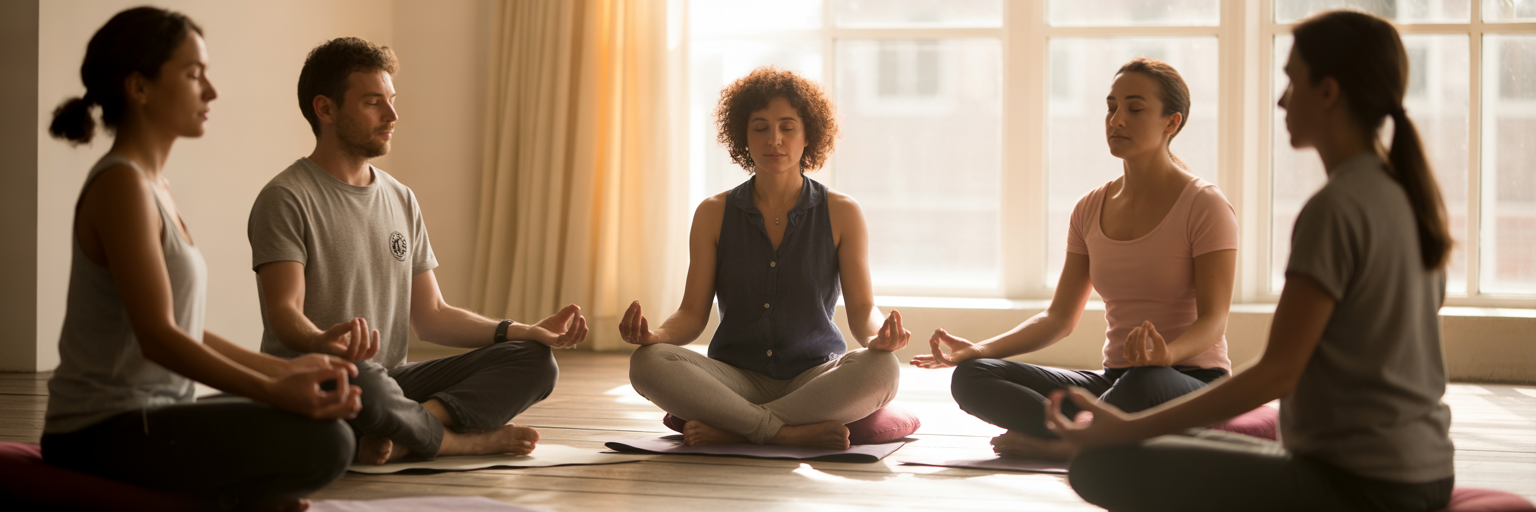
Once that foundation of shared stillness is established, a deeper, more emotional connection begins to form. The non-verbal container of group meditation gives us permission to let our social masks fall away. Without the need to perform or formulate the right response, we can simply be present with ourselves and with others. This creates an environment ripe for authentic vulnerability.
Certain practices actively nurture this bond. A guided meditation for connection, such as a loving-kindness or Metta practice, directs our intention toward compassion for ourselves and for those around us. When practiced in a group, this shared focus creates a palpable field of care, helping members recognize their common humanity and see past superficial differences. These are some of the core benefits of group meditation that solo practice cannot replicate.
This silent communion, this non-verbal attunement, communicates acceptance more powerfully than words ever could. It forges connections rooted in mutual respect and shared presence. This shared presence and non-verbal attunement are central to the work we do at Lev Emunah, creating a space where individuals can feel seen and accepted. You can learn more about our approach here.
| Factor | Solo Meditation | Group Meditation |
|---|---|---|
| Emotional Resonance | Focused on personal introspection and self-regulation. | Amplified feelings of empathy and shared humanity. |
| Sense of Vulnerability | A private experience; vulnerability is with oneself. | A shared, safe vulnerability that builds trust with others. |
| Accountability | Relies solely on self-discipline. | Encouraged by a sense of commitment to the group. |
| Energetic Field | Personal energy and focus. | A collective energy that can feel supportive and uplifting. |
This table highlights the distinct qualitative differences between practicing alone and with a group. While solo practice is essential for self-discovery, group practice adds a unique relational dimension that is crucial for community building.
From Shared Practice to Mutual Growth
The journey from silent connection to a thriving community happens when shared inner experiences are brought into the light. The commitment to a group practice naturally encourages accountability. It is often easier to show up for others than it is to show up for ourselves, and this consistency deepens everyone’s personal practice.
More importantly, building community through mindfulness creates a common language. After a session, members can discuss their insights or challenges with a shared vocabulary and context. A phrase from the meditation like “returning to the anchor of the breath” is no longer an abstract concept but a lived experience everyone in the room understands. This allows for conversations that are richer, more nuanced, and genuinely supportive. The process often unfolds in clear stages:
- Fostering Accountability: The simple act of showing up for others strengthens personal commitment and consistency in practice.
- Creating a Common Language: Shared guided meditations provide a specific framework and vocabulary, allowing for richer, more nuanced post-session discussions.
- Enabling Guided Sharing: A facilitator can help the group process their experiences constructively, turning individual insights into collective wisdom.
The facilitator’s role here is crucial. A skilled guide does more than read a script; they hold the space for the dialogue that follows. According to guidance from the Search Inside Yourself Leadership Institute (SIYLI), a facilitator's ability to model presence and gently guide the group's focus is essential for creating a space where members feel safe enough to share and grow together. As members learn to articulate their inner journeys, they often seek structured ways to continue their development. Our programs are designed to facilitate this deeper dialogue and learning, and you can explore our various courses here.
Building a Lasting Spiritual Home

When a group commits to practicing together over time, something beautiful happens. It transforms from a collection of individuals into a lasting spiritual home. This evolution is not accidental. It is built on the bedrock of consistent, shared rituals, like a weekly guided meditation, that create a rhythm of connection and stability for the community.
Soon, this support extends beyond the meditation cushion. As bonds deepen, the group becomes a spiritual family where members feel safe enough to share life’s challenges and celebrate its successes. This answers the question of how to find a spiritual community that offers genuine belonging. The transformation from a group of strangers into a supportive spiritual family is a profound journey. You can read stories from those who have found this connection within our community. A true spiritual home is defined by several key characteristics:
- Shared Rituals: Consistent, recurring practices that anchor the community's identity and rhythm.
- Beyond-the-Cushion Support: A natural extension of care into daily life, where members celebrate and support one another.
- Shared Values: A foundation of mutual respect and a collective commitment to growth and self-awareness.
- Inclusivity and Accessibility: Creating a welcoming space for all, whether in-person or through digital platforms that connect people globally.
In our increasingly digital world, these principles hold true for online groups. Well-facilitated online meditations can create powerful digital sanctuaries, bridging geographical distances to offer a profound sense of belonging. Ultimately, building a spiritual home is about finding a place where you can be fully yourself while growing with others. We invite you to explore the home we've built at Lev Emunah.