
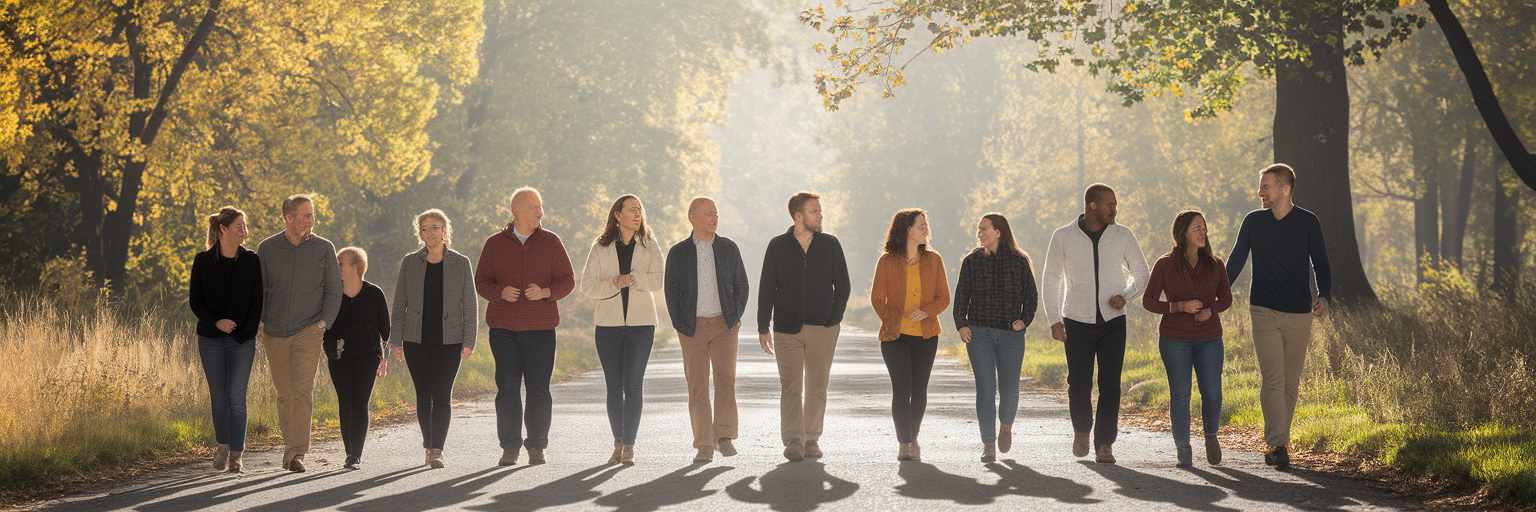
The Power of a Shared Spiritual Journey
The human need for belonging is woven into our very fabric. Yet, a spiritual path can sometimes feel like a solitary walk, a quiet internal process that others may not understand. You might feel a profound sense of connection to something larger than yourself, but simultaneously feel disconnected from the people around you. This is a common and valid experience.
A spiritual community is far more than a social club. It is a dynamic container for growth, a space where shared vulnerability and collective insight accelerate personal transformation. It is not just about finding friends with similar interests. It is about co-creating a space for mutual support in the pursuit of self-awareness and emotional freedom. The benefits of spiritual groups emerge when we realize we are not alone in our questions, our struggles, or our moments of clarity. This shared journey transforms an individual pursuit into a collective strength.
Laying the Foundation Within Yourself

Before you can find your people, you must first connect with yourself. The clarity you cultivate within will act as a compass, guiding you toward connections that truly resonate. This process of self-inquiry is the essential first step, ensuring you seek a community that aligns with your authentic needs rather than one that simply feels convenient. Think of it as drawing a map of your inner world before you venture out.
Here is a simple process to begin:
- Clarify Your Values: Take some time to journal about what truly matters to you on a spiritual level. Is it compassion, truth, service, or creative expression? Identifying your core values helps you recognize them in a group's mission and culture.
- Identify Resonant Practices: What activities make you feel most connected and alive? This could be meditation, studying sacred texts like the Torah and Kabbalah, or mindful movement. Finding a community centered on practices that feel authentic to you creates a natural foundation for connection. For more on how ancient teachings can be integrated into modern life, exploring the foundational principles of an organization like Lev Emunah can offer valuable perspective.
- Set a Clear Intention: Ask yourself what you truly need from a community right now. Is it mentorship from someone further along the path? Is it peer support for emotional healing? Or is it intellectual discussion to deepen your understanding? Defining your intention prevents disillusionment and helps you find a group that meets your current needs.
You do not need to have all the answers. A healthy community provides the space for ongoing exploration and discovery, meeting you exactly where you are.
How to Seek and Identify Your Community
With a clearer sense of your internal landscape, the external search for community becomes more focused and intentional. The question of how to find a spiritual community is less about a secret formula and more about knowing where to look and what to look for. It is an exploration, and it is perfectly fine to test the waters in different places to see what feels right.
Practical Avenues for Your Search
Your community might be closer than you think. Consider local workshops, meditation centers, or even volunteer organizations whose missions align with your values. Online programs have also become a powerful option, offering structured environments that blend deep learning with genuine connection. Exploring various courses that combine learning with community interaction can connect you with like-minded individuals from around the world. Remember, you can have multiple communities for different needs, such as one for quiet contemplation and another for active service.
Evaluating the Health of a Community
Discernment is your most important tool during this search. A healthy community fosters growth, while an unhealthy one can stifle it. According to research published by Positive Psychology, a thriving community is built on trust, respect, and inclusivity. Use the following guide to help you evaluate potential groups.
| Characteristic | Green Flag (Healthy Community) | Red Flag (Unhealthy Group) |
|---|---|---|
| Leadership | Facilitative, encourages shared wisdom | Charismatic leader who is the sole source of 'truth' |
| Communication | Open dialogue, respectful disagreement is welcome | Pressure to agree, questioning is discouraged |
| Inclusivity | Welcomes diverse perspectives and backgrounds | Creates an 'us vs. them' mentality with outsiders |
| Financials | Transparent about costs and use of funds | High-pressure tactics for donations or fees |
| Personal Freedom | Encourages autonomy and outside relationships | Promotes isolation from family, friends, and former life |
Fostering Authentic and Meaningful Connections
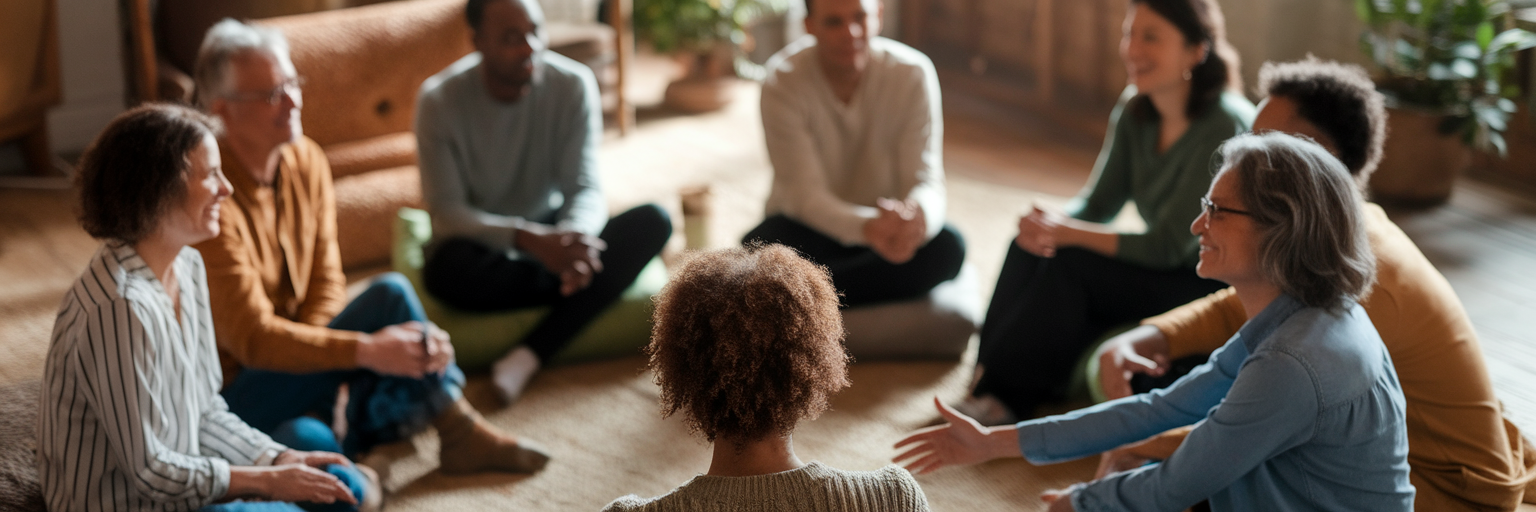
Finding a group is just the first step. The real work and reward lie in building spiritual connections through active and authentic participation. This means moving beyond surface-level conversations and cultivating a space for genuine dialogue. Authentic dialogue is a delicate balance of sharing your own experiences with vulnerability and listening to others without judgment. It is about connecting through shared humanity, not debating abstract spiritual concepts.
To help move conversations into a more meaningful space, try introducing simple, depth-evoking questions into your interactions:
- What is a moment of insight you have had this week?
- Share something you are feeling grateful for.
- What is a challenge you are navigating on your spiritual path?
These prompts invite reflection and create openings for deeper connection. Trust and strong bonds are not built overnight. They are the result of consistent, heartfelt interaction. Hearing others' stories of struggle and breakthrough can be incredibly inspiring and validating. Reading through the experiences shared by others can offer a powerful glimpse into the profound impact of finding one's community and feeling truly seen.
The Art of Mutual Growth and Shared Wisdom
A truly supportive community for personal growth evolves beyond a simple support system into a dynamic environment for mutual transformation. Think of it as a spiritual greenhouse, where every member is responsible for nurturing the growth of others as well as their own. In this space, shared wisdom becomes a powerful catalyst. One person's breakthrough can unlock a new understanding for someone else, and hearing another's struggle can foster compassion for your own journey.
This dynamic also involves constructive challenges. A healthy community is not about constant agreement. As spiritual growth resources like Cru.org emphasize, it provides challenges that push individuals toward deeper transformation. It is about holding each other accountable with kindness and encouraging one another to live in greater alignment with shared values. This process is a real-life training ground for applying spiritual principles, developing virtues like empathy, patience, and unconditional positive regard. This is why platforms that integrate community support with structured learning, such as those offered by Lev Emunah, are designed to create this very process of mutual growth.
Nurturing Your Community for Lasting Transformation
Building a spiritual community is a journey that begins with self-knowledge, moves into mindful searching, and blossoms through authentic participation. This is not a one-time task but a continuous practice. A community is a living entity that requires nurturing from all its members to thrive. Your presence, your vulnerability, and your willingness to both give and receive support are what keep it alive.
Take one small step today. Perhaps it is journaling about your needs, researching a local group, or reaching out to a friend you consider to be part of your journey of finding like minded spiritual people. Your people are out there, waiting to grow with you.