
The Foundation of a Shared Spiritual Journey
Since the dawn of civilization, humans have gathered in circles to share stories, wisdom, and support. This ancient practice holds a profound truth: our deepest transformations rarely happen in isolation. We often think of spiritual growth as a solitary path, a quiet journey inward. Yet, community is not just a helpful accessory; it is an essential catalyst for profound change.
Think of it as the difference between a solo hike and a collaborative expedition. On your own, you can cover ground, but the journey is limited to your own perspective and resilience. With a group, you have others to help you navigate treacherous terrain, point out views you might have missed, and offer a hand when you stumble. This shared experience provides crucial support and perspective that makes the entire journey richer.
This taps into a fundamental psychological need for belonging. A supportive group creates a space of safety where personal experiences are validated, not judged. This security is what allows for true vulnerability, the very state required for deep self-discovery and healing. When you share a personal breakthrough or a moment of doubt, seeing it reflected in the eyes of others who understand confirms that you are not alone. The benefits of spiritual community are found in this very reflection, where individual insights are amplified and strengthened by the collective energy. It turns a whisper of personal truth into a confident chorus.
Hallmarks of a Healthy Spiritual Community
Understanding why community is vital is the first step. The next is learning to recognize a nourishing environment from a toxic one. A healthy spiritual community is built on a foundation of genuine openness, mutual respect, and kindness. It is a place that encourages questions and honors each person's unique pace, recognizing that spiritual growth is not a race with a uniform finish line.
As spiritual teacher Jim Tolles points out in his guide on finding a spiritual community, a key sign of a healthy group is one that encourages free expression and allows members to explore without pressure. Conversely, certain red flags signal controlling dynamics. Be wary of groups that operate on fear-based agendas, demand rigid conformity, or foster an "us vs. them" mentality. True spiritual exploration thrives in freedom, not in fear.
Ultimately, the right community must align with your personal values. To see if a community's philosophy aligns with your own, explore its foundational principles, such as those that blend ancient wisdom with modern understanding. Whether the teachings are rooted in Kabbalah, meditation, or another tradition, they should resonate with your inner truth. This discernment empowers you to choose a community where you can be authentic, not one where you feel you must perform.
| Characteristic | Healthy Community (Green Flag) | Unhealthy Community (Red Flag) |
|---|---|---|
| Leadership | Facilitative, empowering, and transparent | Authoritarian, controlling, and demands obedience |
| Communication | Open, respectful dialogue; dissent is welcome | Gossip, criticism; questions are seen as threats |
| Member Autonomy | Encourages personal discernment and authenticity | Pressures conformity and discourages individuality |
| Emotional Tone | Supportive, kind, and uplifting | Based on fear, guilt, or exclusivity |
| Commitment | Flexible and respects personal boundaries | Demands excessive time or money without transparency |
Practical Steps to Find Your Community
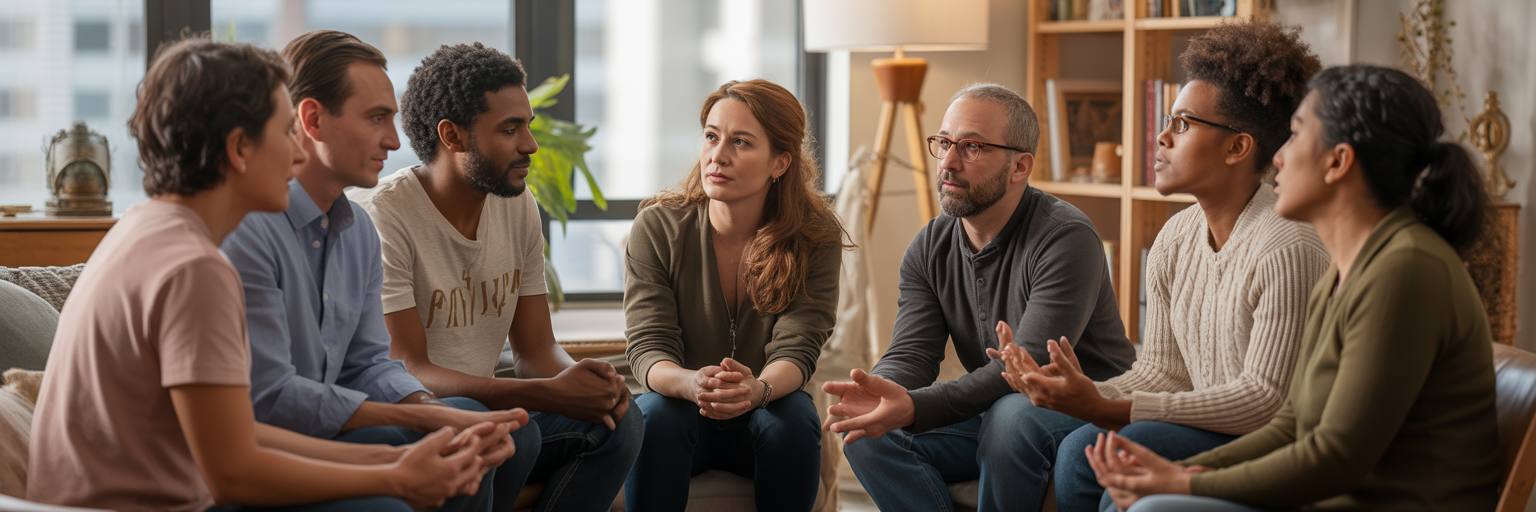
Once you know what to look for, the search for your spiritual circle can begin. This process is about proactive and discerning exploration. Here is a practical guide on how to find a spiritual community that feels right for you.
- Start with Local Resources: Your local area is often rich with opportunities. Look into workshops at meditation centers, yoga studios, or community colleges. Specialized study groups can also be a wonderful entry point. For those interested in deep spiritual texts, exploring a Kabbalah study group or similar gatherings can provide both knowledge and connection.
- Explore Digital Spaces: Geography no longer needs to be a barrier to connection. Curated online spiritual groups, private forums, and virtual workshops are legitimate and powerful avenues for building deep relationships. These spaces can be especially valuable for those with niche interests or limited local options, offering a global community at your fingertips. For those seeking structured learning, exploring dedicated online courses can be a powerful starting point.
- Adopt a 'Try Before You Commit' Mindset: You wouldn't buy a house without seeing it first. Approach your search for community with the same practical wisdom. Attend a few meetings or events as an observer. Pay attention to the atmosphere. How do members interact with each other? How does the leader or facilitator guide the conversation? Does the space feel welcoming and safe? Trust your intuition. The right group will feel less like an obligation and more like coming home.
Co-Creating a Space for Mutual Growth
What if you have searched and still haven't found the right fit? This is not a dead end but an invitation. It may be a sign that you are meant to create the space you are seeking. The process of building a spiritual support group is less intimidating than it sounds. It can begin with inviting just one or two friends for an intentional conversation over coffee.
Defining Your Group's Purpose
Every strong community is united by a shared intention. Before you gather, clarify the purpose. Is the goal to study a specific text, practice meditation together, or simply hold space for members to share their personal journeys? A clear, shared purpose acts as the group's North Star, guiding your discussions and activities.
Establishing Ground Rules
Safety is paramount for vulnerability. Co-create a few simple but firm ground rules to protect the integrity of the space. Emphasize principles like confidentiality, respectful communication, and listening without trying to "fix" anyone. These agreements build the trust necessary for authentic sharing and ensure everyone feels heard and respected.
The Role of a Facilitator
A facilitator is not a hierarchical leader who holds all the answers. Instead, they are a guardian of the process, ensuring that conversations stay on track and that every voice has a chance to be heard. This role can rotate among members or be held by someone who naturally has these skills. For those who feel called to guide others, developing facilitation skills through a dedicated program can provide the tools and confidence needed to create a truly transformative space.
A simple meeting format can provide a helpful structure:
- Check-in: A brief opening for each person to share how they are arriving.
- Meditation or Reading: A short, shared practice to center the group.
- Discussion: The main portion of the meeting, focused on your group's purpose.
- Closing: A moment of gratitude or a closing thought from each member.
The Transformative Power of Shared Wisdom

Whether you find your community or create it, the outcome is a profound acceleration of mutual spiritual growth. When one person shares an insight, it creates a ripple effect of learning that is impossible to achieve alone. Another member might build on that idea, offering a different perspective that deepens the understanding for everyone. This collective wisdom becomes a powerful engine for transformation.
A spiritual community also provides gentle accountability and helps maintain spiritual vitality. Regular meetings create a rhythm that keeps you connected to your path, especially during times when personal motivation wanes. Knowing your circle is waiting for you can be the encouragement needed to stay committed.
This shared journey is a living entity, requiring care and presence from all its members. The reward for this effort is a richer, more resilient spiritual life filled with profound connection. The transformative power of a supportive circle is not just a theory. It is reflected in the profound journeys of individuals who have found connection and healing through shared wisdom, illuminating what is possible when we walk the path together.